The Anatomy of Nordic Paths
When walkers step onto their first Nordic trail, they often expect gravelled footpaths and frequent wooden directional posts. While popular nature reserves and trailheads near transport hubs offer polished paths, wilderness routes quickly transition into primitive footpaths beaten into the peat, stone cairn markers spaced hundreds of metres apart, and long runs of spång (wooden duckboards).
A typical day on a Nordic trail involves balancing across these narrow wooden boardwalks through squelching mires, ascending steep moraine shelves left behind by prehistoric glaciers, and picking your way through boulder fields (often referred to as ur or block fields) where every single step requires careful foot placement on lichen-crusted granite.
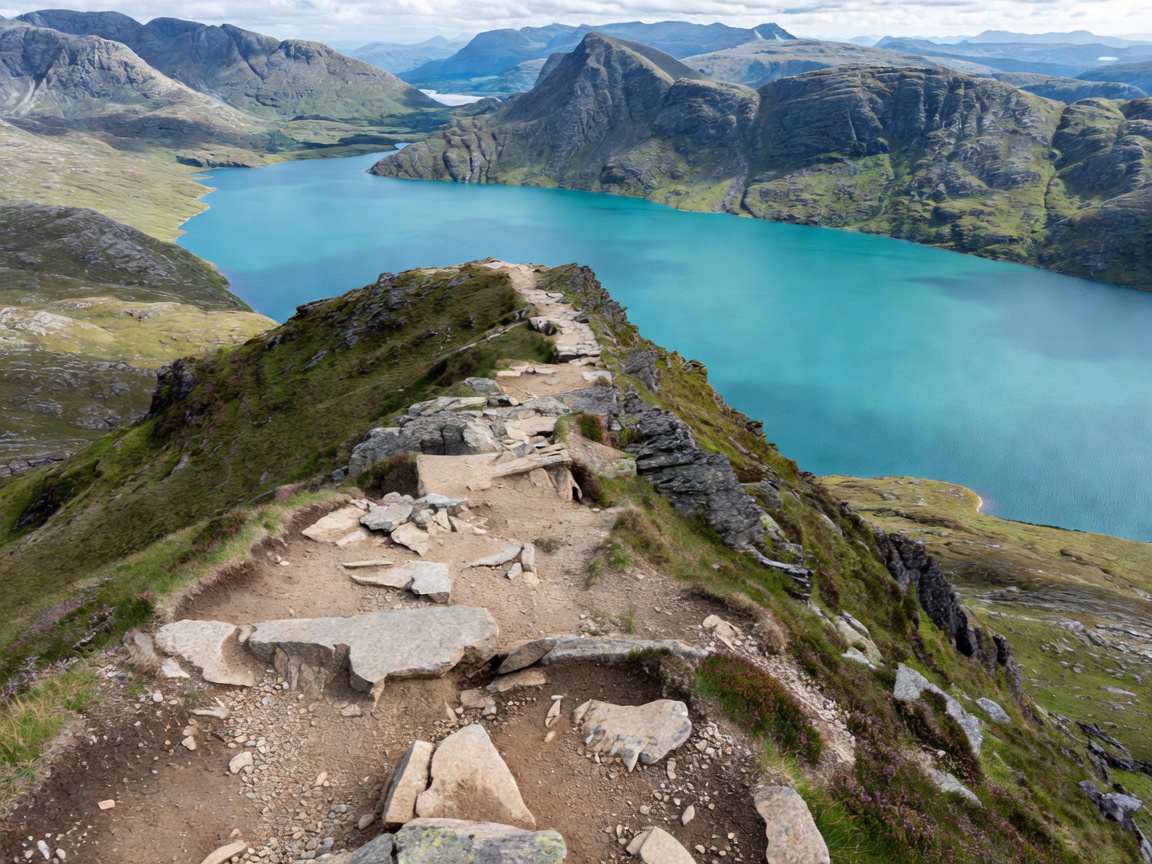
Above The Birch Line: High Alpine Fjell Routes
Above approximately 600 metres in northern Scandinavia, birch trees yield to wind-scoured tundra. Visibility can stretch for thirty kilometres on still days, but low cloud can drop the horizon to ten paces in minutes. Navigation relies on painted red trail Ts or painted stone cairns.
Day Hikes Versus Multi-Day Traverses
Day hikes in the Nordic region allow you to test your gear without committing to heavy loads. Day routes around places such as Jotunheimen or the edges of Finnish Lapland generally take between three and seven hours, featuring marked loops that return directly to base facilities or bus stops.
Multi-day trails, by contrast, demand total self-sufficiency or disciplined hut-to-hut planning. Once you walk beyond your initial valley, resupply points are non-existent outside of designated mountain stations spaced twenty to thirty kilometres apart. Carrying a minimum of five days of calorie-dense food, emergency shelter, and water filtration equipment is standard backcountry practice.
Trail Types and Regional Landscapes
Boreal Forest Trails
Common across Finland, central Sweden, and eastern Norway. Dense pine and spruce stands, thick moss carpets, and bog crossings. Excellent wind protection, but slow going over wet roots and peat bogs.
Fjord & Coastal Paths
Characterised by dramatic vertical relief. You might climb 800 vertical metres straight out of sea level over three kilometres. Slippery grass, ocean mist, and mud are common, offering striking coastal views.
High Mountain Fjell Routes
Expansive, treeless plateaus. Wind exposure is continuous. Trail surfaces consist of crushed stone, peat, and boulder fields. Extremely fast walking in dry calm conditions, but severe in cloud cover.
Trail Difficulty, Distance, and Elevation Realities
In many mountain systems, trail distances are expressed strictly in kilometres. In Nordic trail culture, distance is only half the story. A six-kilometre hike across high fell block fields can take four hours of intense concentration, whereas a twelve-kilometre walk along a compacted forest valley might take under three hours.
Always evaluate trail difficulty based on:
- Total vertical elevation gain: Coastal and fjord paths carry brutal gradients with minimal switchbacks.
- Underfoot substrate: Ur (boulders) and wet bog boardwalks demand double the energy of firm earth.
- Water obstacles: Does the route have suspension bridges, or does it demand unbridged river wades (vad)?
Seasonal Progression: When to Step Onto the Trail
The Nordic hiking season is concentrated and intense:
- Early Summer (June): Snowmelt is raging. Rivers are at their highest, coldest, and most dangerous. Trails can be heavily saturated. Night skies are illuminated by the midnight sun.
- High Summer (July to early August): Warmest air temperatures (typically 12°C to 22°C). Long daylight hours. Mosquitoes and blackflies peak in forest valleys but disperse on breezy fell tops.
- Autumn / Ruska (Late August to late September): The birch forest explodes into copper, gold, and crimson foliage. Insects vanish. Crisp nights bring early frost, and snow begins dusting high peaks. Many seasoned hikers consider this the prime window.
- Winter (October to May): Trails disappear entirely beneath deep snowpack. Walking gives way to backcountry ski touring and snowshoeing with specialist winter gear.
What Beginners Should Look For
If you are planning your first Nordic wilderness walk, select a trail with clear waymarking, accessible hut systems, and established escape routes into populated valleys. Avoid ambitious off-trail navigation across untracked tundra until you are confident reading 1:50,000 topographic contours in low visibility.